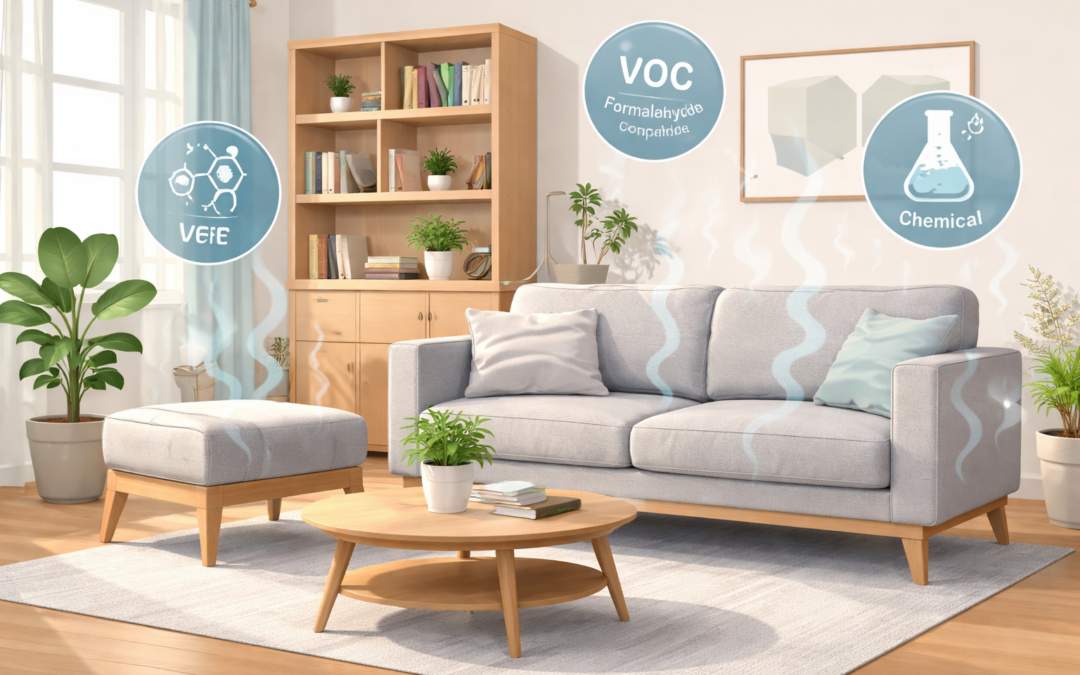
New furniture can transform a room — but it can also change the air you breathe. Off-gassing, the release of chemicals from materials such as composite wood, adhesives, foams and textiles, is widely recognised in Australia’s sustainability and indoor-air-quality sectors. Yet the people buying, specifying and installing furniture often have limited insight into what those products are made from or how long emissions may continue.
For the Australian Furniture Industry Stewardship Council (AFISC) this is more than an indoor air issue. It is a transparency issue, and it goes to the heart of building a safer, more responsible furniture sector in Australia.
What Is Off-Gassing?
Off-gassing matters because it affects the quality of indoor air. VOCs released from materials such as composite wood and foams can contribute to irritation, headaches, fatigue and discomfort, and may worsen symptoms for people with asthma, allergies or respiratory sensitivities. The issue is not simply the “new furniture smell” but the chemical exposure that can accompany it, particularly in spaces where ventilation is limited or people spend long periods indoors.
Off-gassing occurs when chemical compounds slowly evaporate from furniture materials into the air. It is most common in products that contain:
- Composite wood made with formaldehyde-based resins
- Synthetic foams and fillers
- Adhesives, sealants and surface coatings
- Textiles treated for stain or water resistance
- Vinyl, plastics and laminate finishes
These materials are often selected for cost, durability or performance, but they can release chemicals that affect indoor air quality. Emissions tend to be strongest when a product is new, especially if it has been wrapped, sealed or stored for long periods before installation.
How Long Can Off-Gassing Last?
A recent article published by The Roundup brings together information on how and why furniture off-gasses, the types of materials most associated with VOC emissions, and the typical timeframes involved. Although written for a US audience, the underlying science is universal and highly relevant to furniture supplied into the Australian market.
Consistent evidence suggests that:
- VOC emissions are usually highest in the first several months
- Levels can take up to two years to stabilise and drop to background concentrations
- Warm, humid and poorly ventilated environments can prolong off-gassing
- Sealed, wrapped or container-stored furniture often releases more VOC emissions when first opened
While emissions reduce over time, the initial period following installation is often when concentrations are greatest, particularly in enclosed settings such as offices, classrooms, bedrooms and aged care environments.
Why This Matters in Australia
Australia imports a significant share of its furniture, and not all products are made to the same standards or material specifications. Internal testing within the Australian sector has shown variable use of adhesives and resins, inconsistent chemical restrictions, limited disclosure on material composition and minimal transparency around chemical treatments in foams and textiles.
Furniture is part of almost every indoor space, from homes to workplaces to public buildings. This makes off-gassing an issue everywhere, and especially in settings like education, aged care, health and government procurement where people spend long hours indoors.
What AFISC Is Doing
AFISC continues to support industry in making safer, more transparent material choices. Our work includes helping manufacturers understand chemicals of concern and how they appear in common furniture materials, while highlighting safer alternatives.
Through initiatives such as the Furniture Passport Australia System (FPAS), AFISC plans to strengthen material and chemical disclosure, improve visibility across supply chains and align with evolving regulatory expectations, including national standards such as IChEMS and broader indoor air quality considerations, while supporting improved material and chemical transparency across the supply chain.
What Buyers and Procurers Can Do
Whether selecting furniture for a home, school, office or public space, several actions can help reduce exposure and improve outcomes:
- Ask suppliers for verified information about materials and adhesives
- Look for recognised certifications that assess harmful emissions
- Ventilate spaces well when new furniture is installed
- Prioritise suppliers with transparent material and chemical disclosure
- Reduce the use of low-cost, high-emission composite materials where possible
Even small decisions can significantly reduce the impact of VOCs in indoor environments.
The Path Forward
Off-gassing may be invisible, but its effects aren’t. With clearer disclosure and safer material choices, it is an issue the industry can genuinely solve. That starts with giving manufacturers, suppliers, procurers and consumers access to trustworthy information about what furniture is made from — and how those materials behave over time.
AFISC is focused on enabling this shift. By strengthening transparency and supporting industry understanding of chemicals of concern, Australia can reduce exposure risks and build a furniture sector that is healthier, more accountable and more circular.
To find out more about AFISC and become a member of the community, click here. Please feel free to contact us at care@afisc.eco for more information about this article or to learn more about AFISC.