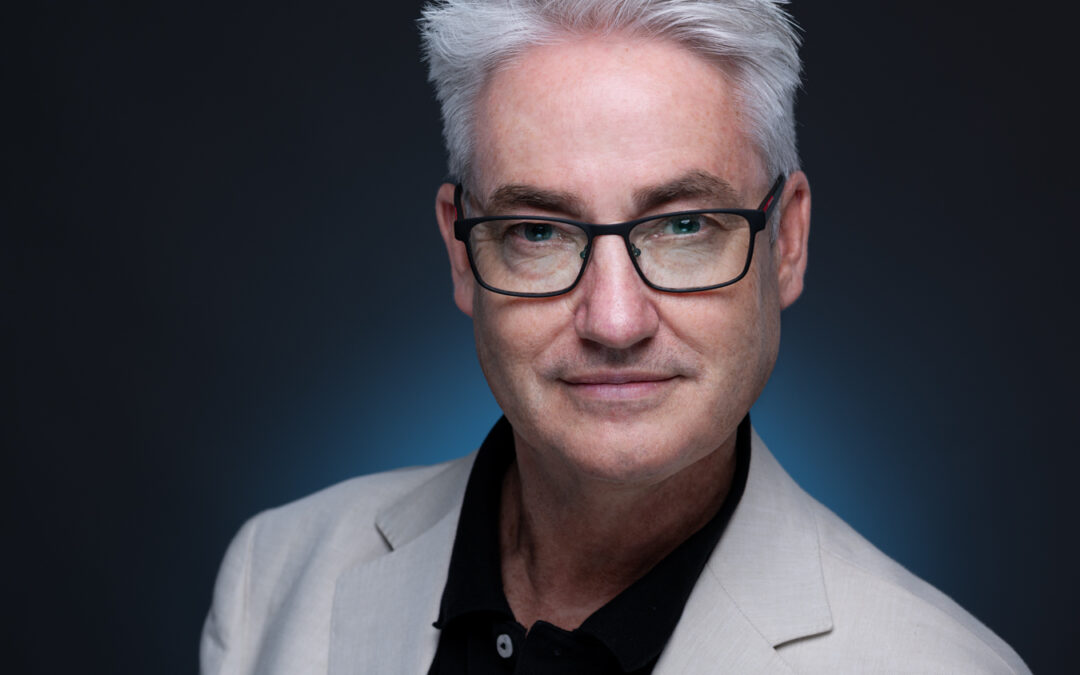
In our second Australian Furnishing Industry Stewardship Council member profile, we hear from Tony Leask, the founder and CEO of Premium Surface Protection (PSP.)
People are a little more curious as well as a little more demanding of proof when it comes to sustainability claims nowadays, believes Tony Leask.
The founder and CEO of Premium Surface Protection (PSP) — which makes, sells and applies non-toxic, environmentally responsible nanotechnology products — has noticed “more and better questions” being asked since the company began in 2009.
“They’re not just looking at a product and the label and saying, ‘Oh, it’s environmentally friendly, that’s fine.’ They want to know how that certification came about, how it is environmentally friendly, the manufacturing process, etcetera,” he explained.
“It’s through the consistency of engagement by the Australian Furniture Association (AFA) and enlightening stakeholders in the furniture industry of chemicals of concern, that now people are asking more and better questions. And what we’re doing with the furniture passport is giving people the tools to ask better questions, which is really, really important.”
Leask is also a founding member of the Australian Furnishing Industry Stewardship Council (AFISC), and a long-time member of the AFA. The passport he referred to is AFISC’s under-development FurnitureDNA digital passport, enabling supply chain traceability and transparency, and which will be rolled out this year.
Many of PSP’s customers are in the furniture industry, with other markets including high-end retail, aged care, real estate developers, resort operators, hoteliers, cruise ships, aerospace and government clients. Their pledge to clients is “protecting the beauty, colour and life of your furnishings”.
Their technology, developed in conjunction with a European chemical supplier, is formulated to suit local demands unique to Australia. It creates an effective “molecular-level bond” where it’s applied, rather than acting as a coating that fractures and wears off quickly.
As well as Australian sales, PSP also exports.
“With the help of ecologically-focussed chemists in Europe, we formulate our own raw ingredients, which are then imported to Australia, which we blend down locally,” added Leask.
“So we reduce our environmental footprint of shipping, not a ready to use product, but a concentrated product that we can then have an Australian percentage input into it as well.”
It starts with silica quartz, which is then processed into a modified polysiloxane in a liquid form, with the solution containing no fluorochemicals or precursors and zero chemicals of concern.
Leask describes PSP as “a small family run business with a big focus” built on integrity and a genuine quest to help people and companies solve their textile protection and care challenges, with its headquarters on the Gold Coast, a second location in Melbourne, and a network of subcontracted “high-end textile experts throughout the country.”
He credited an approach that “always looked for better options” for the non-toxic chemicals used, as well as starting in the industry over 15 years ago and noticing a lack of information about what went into products.
“I think secret formulas are a thing of the past,” he said.
“Clarity is key!”
It’s an approach that has looked increasingly prescient as persistent chemicals have attracted scrutiny and restrictions. A notable example is the Australian government’s effective ban last year on the import, use and manufacture of PFOA, PFOS and PFHxS (three types of PFAS chemicals.)
“There was a bit of a wow factor when a couple of years ago, they started warning of PFAS being a problem,” recalled Leask.
“And I [said], ‘oh, well, I’m glad we did this eight years ago.’”
Leask said that membership of the AFA and AFISC helped his small company achieve a “bigger voice, like I feel more comfortable explaining where I’ve come from and what we’re doing through an association with a larger voice and expanded reach.”
Of the upcoming Grow. Promote. Protect. Forum 2026, he said that the event promises “networking [with] like-minded people, it’s the ability to bounce ideas off of people that we might be thinking about something for the future.
“Being part of the AFA lets me be around key people with the same focus, and all the associated benefits of being part of a bigger association with like-minded people.
Tony Leask will be a panellist on the Vapes. Cocaine. Crystal Meth. PFAS session, concluding the first day of GPP 2026. For more information on the event – to be held on February 24 and 25 at RMIT University’s Emily McPherson Building – visit this link.